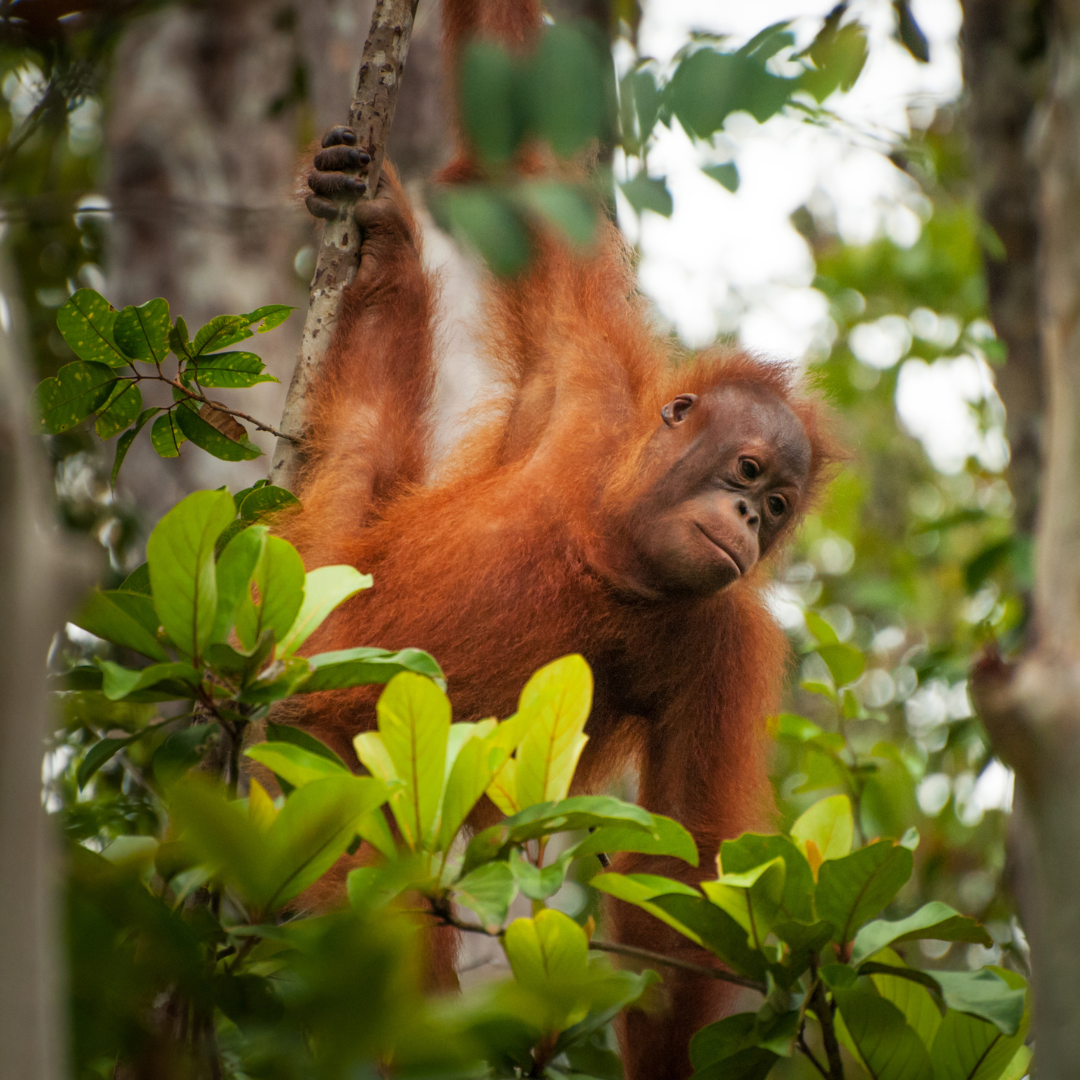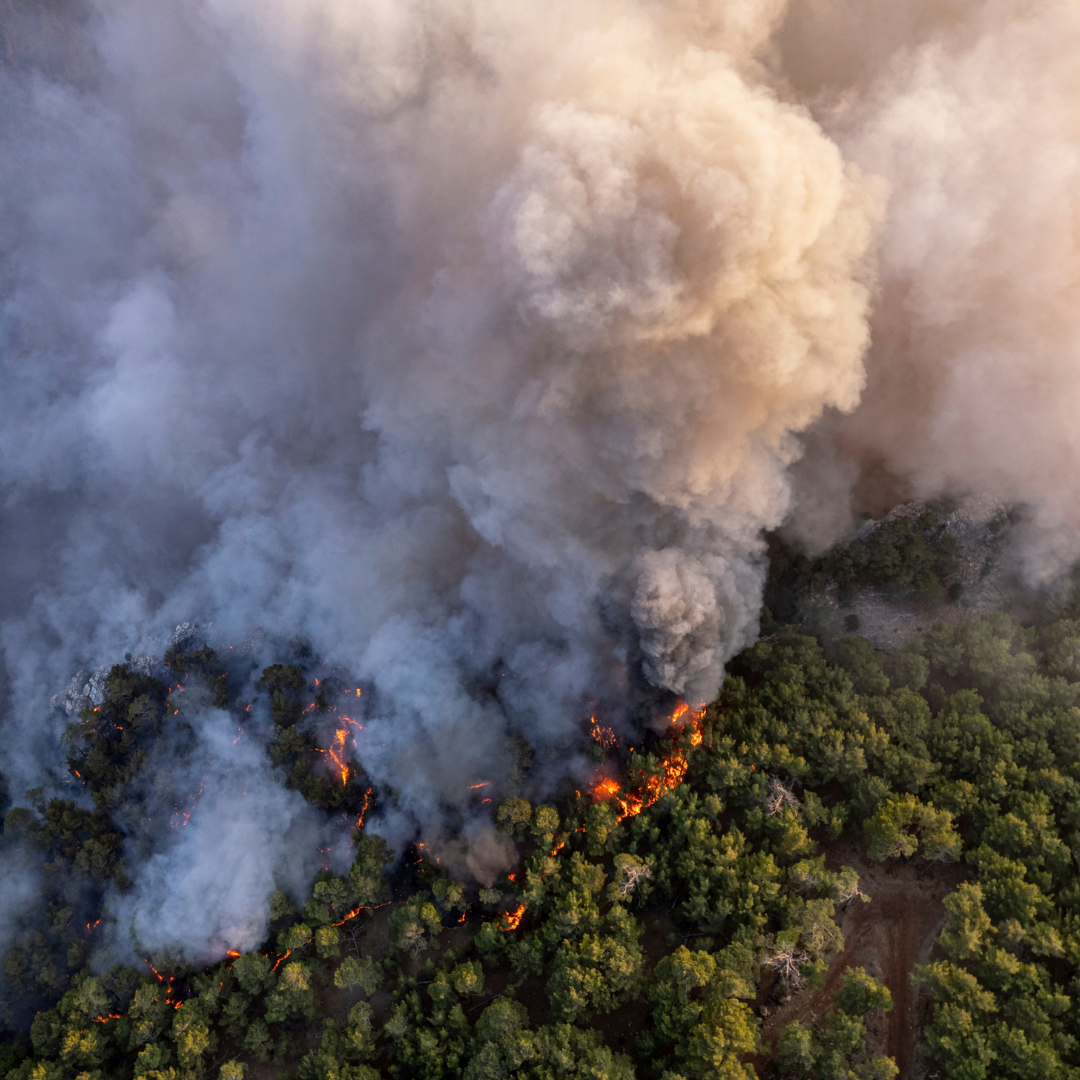


Indonesia’s outdated conservation law is failing to protect its rich biodiversity. For 33 years, the 1990 Law on the Conservation of Living Natural Resources and Their Ecosystems has served as the backbone of conservation policy — yet the country’s wildlife continues to vanish. According to the IUCN Red List, more than 15,000 species of plants, animals, and fungi in Indonesia are now threatened with extinction. As one of the world’s most biodiverse nations, Indonesia urgently needs a modern legal framework that can keep pace with today’s ecological crises and halt the rapid loss of biodiversity.
Several civil society organizations have noted that the Conservation Law 1990 is no longer relevant to current needs, including:
- Approach conservation that is too focused on protected and neglected natural sites outside of them;
- Lack of mechanisms for restoring damage
- Lack of recognition and protection for indigenous/local communities
- Centralized conservation implementation, especially in relation to indigenous/local communities, and
- Conservation approaches that are in line with international agreements, particularly the Convention on Biological Diversity (CBD) and the Kunming-Montreal Global Biodiversity Framework (KM-GBF), have not been accommodated.
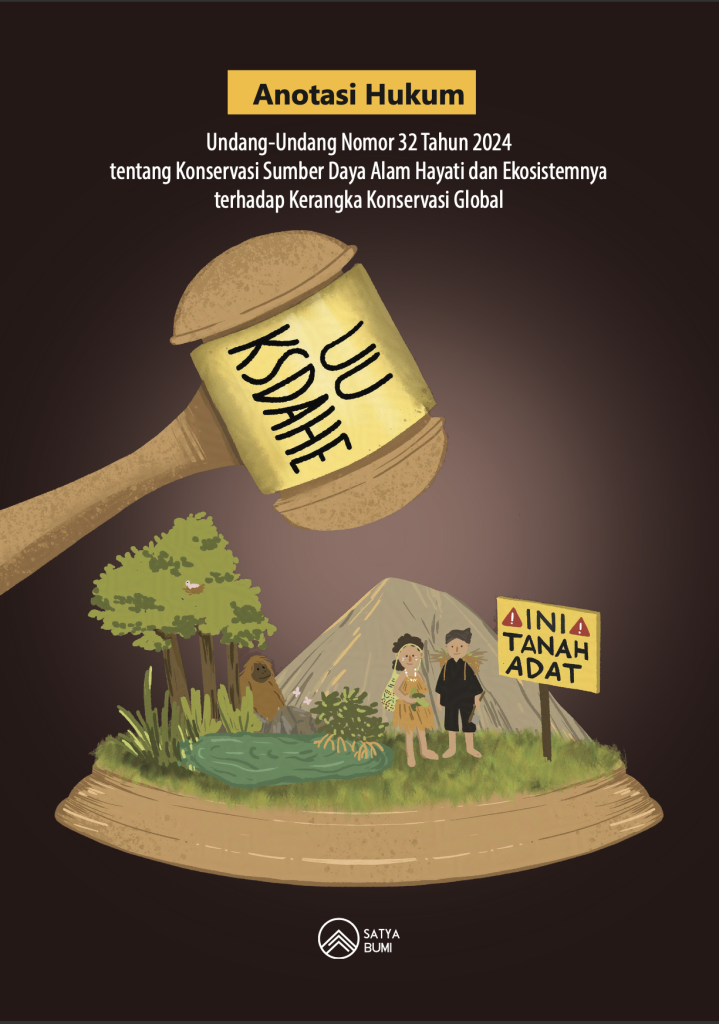
In 2024, the Indonesian government passed Law 32/2024 on Amendments to Law 5/1990 on the Conservation of Living Natural Resources and Their Ecosystems. Satya Bumi provides several legal notes regarding the substance and implications of the amendments to the Conservation Law 2024 on satyabumi.org
Satya Bumi notes that the amendments to the Conservation Law 2024 have added to and changed the designation of protected conservation areas in Indonesia. These areas are divided into:
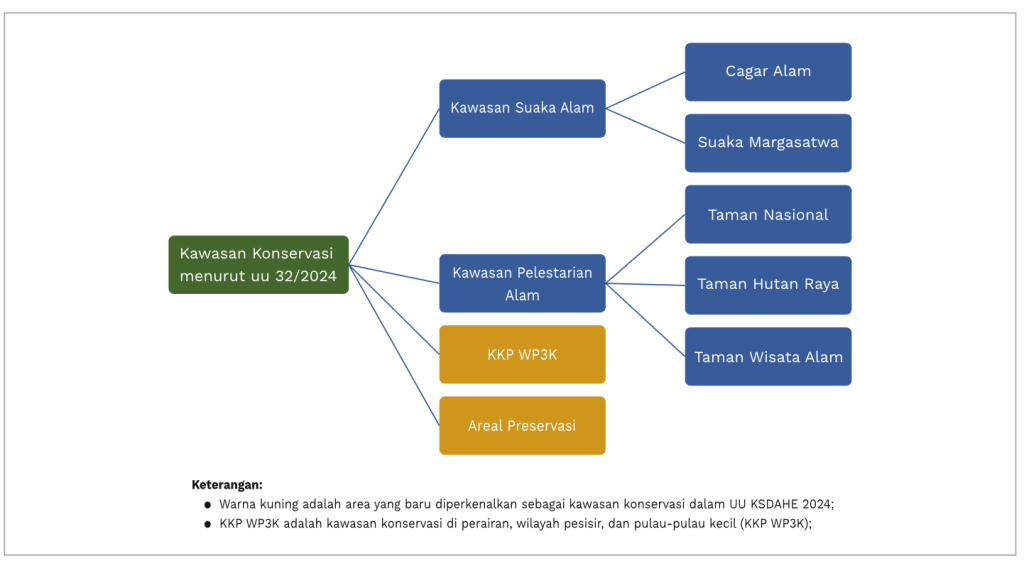
Marine, Coastal, and Small Island Conservation Areas (KKP WP3K) are a new legal construct; the regulations in the KSDAHE Law are not yet very clear, especially in relation to Nature Reserves (KSA) and Nature Conservation Areas (KPA), which also cover aquatic areas. Outside of protected areas, there are Preservation Areas. The ecological conditions of Preservation Areas are maintained to support the functions of life support and SDAHE. Because they are not protected areas, Preservation Areas can be located in built-up areas or on land rights. Rights holders are required to carry out SDAHE conservation measures, including providing funding.
In addition, the KSDAHE Law also regulates the participation of communities, including customary law communities. However, the KSDAHE Law does not detail how communities, especially key stakeholders such as indigenous/local communities around and within conservation areas, will be involved. This has the potential to repeat the mistakes of previous conservation efforts, where indigenous communities were marginalized from their living spaces.
In a study conducted by Satya Bumi, the gap between the revised KSDAHE Law and the Indonesian Biodiversity Strategy & Action Plan (IBSAP) 2025-2045 was analyzed, along with developments in the biodiversity conservation framework in the CBD and KM-GBF.
The Indonesian Government’s Cherry Picking Disease in Conservation Efforts.
Indonesia is one of the countries that contributed its ideas to the paradigm shift from anthropocentrism to ecocentrism in the drafting of the Rio Declaration. Although non-binding, this declaration accommodates the CBD and KM-GBF conventions.
The Rio Declaration respects the state management model as part of each country’s sovereignty, but this respect does not give ratifying countries of the Convention on Biological Diversity (CBD) the right to disregard the principles/fundamentals of the Rio Declaration in the formulation of National Biodiversity Strategies and Action Plans (NBSAPs), strategic policy documents.
Satya Bumi found that, at the very least, the Conservation Law 2024 and the IBSAP laws deliberately ignore four principles of the Rio Declaration on the global conservation framework, namely:
- The Conservation Law 2024 and IBSAP laws do not regulate the importance of FPIC mechanisms in the information and approval of conservation area management, and do not emphasize the active involvement of indigenous peoples and local communities in their traditional knowledge and practices. (Principle 22 of the Rio Declaration). p. 18 of Satya Bumi’s legal annotation.
- The Conservation Law 2024 does not prioritize the precautionary principle in its conservation efforts. (Principle 15 of the Rio Declaration). ibid
- The Conservation Law 2024 and IBSAP do not facilitate and encourage public participation by providing extensive information, particularly to indigenous peoples and local communities. (Principle 10 of the Rio Declaration). p. 19, Satya Bumi legal annotation.
- The Conservation Law 2024 does not regulate the prevention of incentives or subsidies that are detrimental to biodiversity. (Principle 7 of the Rio Declaration). p. 20 of Satya Bumi’s legal annotation.
These actions put the Conservation Law 2024 at risk of being unable to provide a sufficient legal basis for Indonesia to meet several KM-GBF and CBD targets. Furthermore, the targets and objectives of the CBD and KM-GBF can be accessed openly through the following links: cbd-en.pdf and 15/4. Kunming-Montreal Global Biodiversity Framework.
Who is authorized in the Preservation Area?
The Conservation Law 2024 has added a new nomenclature to its regulations, namely “Preservation Area.” This update offers the need for SDHAE conservation outside of Conservation Forest areas. However, there are no specific provisions regarding how to determine preservation areas, guarantees that communities living in preservation areas will not be displaced, and the authorities that will manage them.
Satya Bumi found that, in terms of definition and similarity, preservation areas are similar to Essential Ecosystem Areas (KEE).
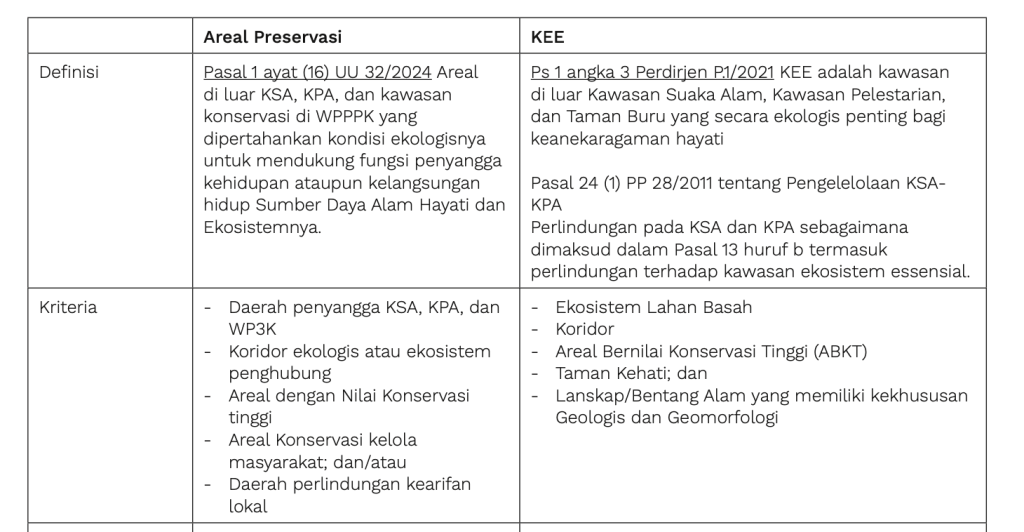
Based on the similarities in characteristics in the table above, Preservation Areas can be assumed to be the same as KEE. This raises the question: are Preservation Areas managed by the provinces?
However, an important lesson is highlighted: considering the experience of KEE, the existence of the Province (Governor) is not effective enough to coordinate stakeholders as guardians of the area, especially for KEE, whose tenure status is beyond the authority of the governor’s subordinates.
Indigenous peoples are vulnerable to criminalization under the Conservation Law 2024 Law
The 2024 KSDAHE Law also recognizes the specificity of corporate crimes, both in terms of slightly heavier criminal penalties and additional penalties that include rehabilitation costs and the dissolution of corporations. The absence of exceptions for traditional activities, especially those related to subsistence, means that the KSDAHE Law risks unfairly ensnaring indigenous/local communities.
Conclusion
According to Satya Bumi, the Conservation law 2024 does not provide legal guarantees that sites or areas that meet the above criteria must be protected, especially within the framework of protected areas such as KSA, KPA, and KKP WP3K.
There are four problems with the Conservation law 2024 in this regard. First, the Conservation law 2024 does not yet provide a sufficient legal basis for the protection of key biodiversity areas (KBA) and important ecosystems in Indonesia. The Conservation law 2024 does not designate areas that are characteristic of KBAs and important ecosystems for protection. Second, the regulation of Preservation Areas still requires the encouragement of derivative regulations due to weaknesses in its provisions. This is because the KSDAHE Law does not specify what kind of ecological characteristics an area must have to be designated as a protected area or Preservation Area. Third, the management of terrestrial and aquatic conservation is not yet optimal due to potential regulatory overlaps. Fourth, there is a lack of mechanisms for the restoration of degraded ecosystems and monitoring.
Recommendations for Indonesia’s Conservation law 2024
- Criteria for protected areas: Derivative regulations must establish criteria for determining protected areas that include Key Biodiversity Areas (KBA) and important ecosystems, and link them to protection priorities (e.g., left natural, ecosystem management, limited use, or activity restrictions).
- Designation of areas and their boundaries: The process of designating protected areas must take into account the interests and rights of indigenous/local communities that depend on natural resources for their livelihoods, culture, and religion. Areas of significant importance to indigenous peoples must be recognized as part of protected areas.
- Restoration of degraded ecosystems: Derivative regulations need to regulate ecosystem restoration outside formal conservation areas (such as KSA, KPA, KKP WP3K), including the determination of the status of post-rehabilitation areas and restoration procedures (identification, cessation of causes of degradation, and restorative measures).
For more complete study results, please refer to Satya Bumi’s publication on the legal annotation of Law Number 32 of 2024 concerning the Conservation of Living Natural Resources and Their Ecosystems in relation to the Global Conservation Framework.