

Jakarta – The Indonesia Pomalaa Industrial Park (IPIP) is a nickel processing and battery manufacturing industrial estate being developed across 11,000 hectares in Kolaka Regency, Southeast Sulawesi. The development of IPIP has been promoted under a new branding as a “green” and sustainable industrial park. In 2022, IPIP was designated a National Strategic Project (PSN), and in 2025 it was granted National Vital Object status. One of the primary justifications is that IPIP is expected to support downstream industrialization and the energy transition. However, the park’s green claims are far from reality.
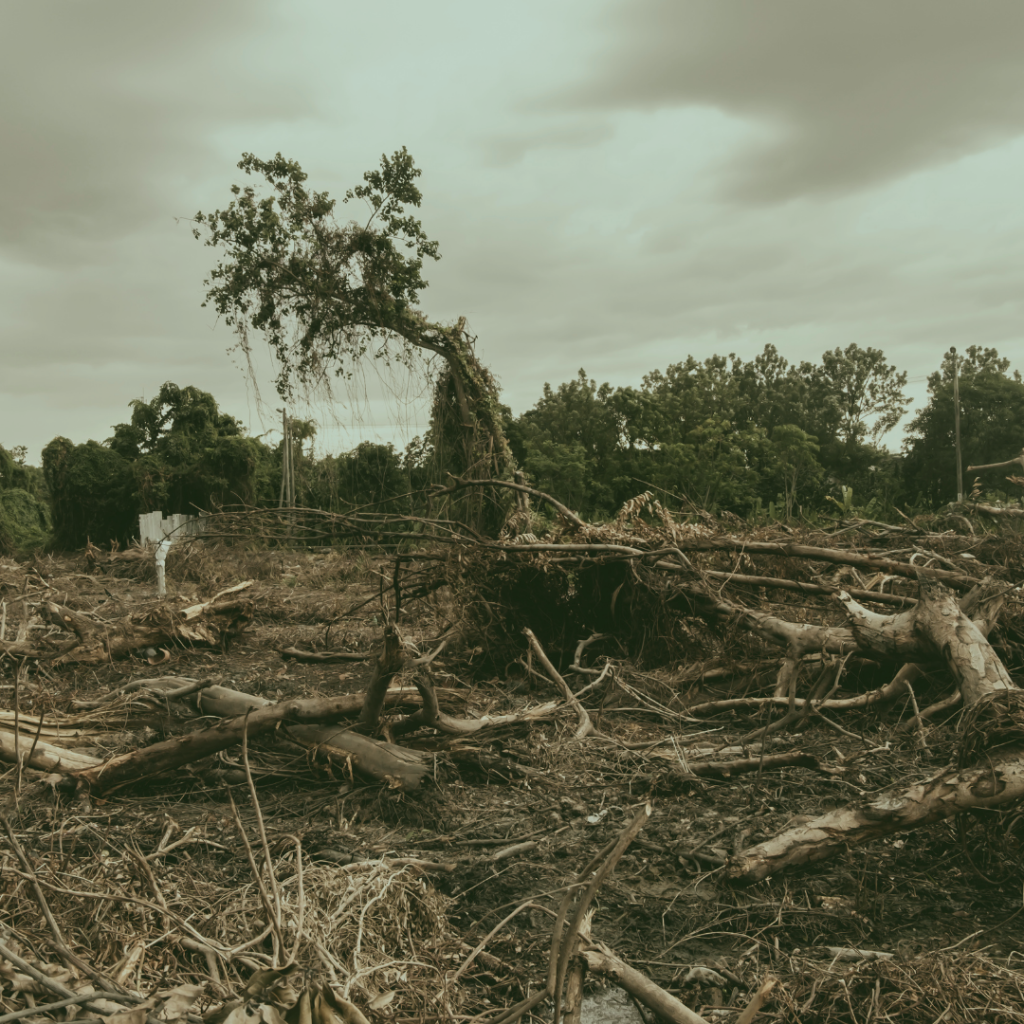
Satya Bumi and Puspaham, with support from Mighty Earth, found that IPIP currently managed by a consortium under PT Kolaka Nikel Indonesia (KNI), consisting of PT Vale Indonesia, Huayou Cobalt, and Ford Motor already cleared 2,849.9 hectares of land. Meanwhile, PT Vale’s concession area, which forms part of IPIP, overlaps with 5,856.62 hectares of protected forest. Deforestation within this area has the potential to release 32% of carbon emissions based on the indicative High Carbon Stock (HCS) map, directly contradicting the goals of the energy transition and climate crisis.
“Why are they able to mine and open concessions on the protected forest? Again because of its designation as a National Strategic Project (PSN). It’s very concerning because Pomalaa is home of a lot of biodiversity, and the people, they rely on the environment to live,” Alexandra Aulianta, a Satya Bumi Campaigner said.
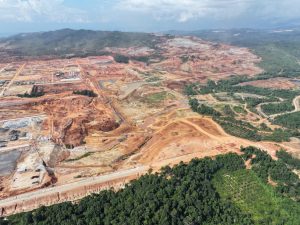
Since 2022, the development of IPIP has also increased environmental pressure through sediment runoff into nearby river basins around Pomalaa. Based on spatial monitoring conducted by Satya Bumi, IPIP is built across two watersheds; the Mekongga and the Oko-oko. The Oko-oko Watershed serves as the main irrigation source for 247 hectares of agricultural land in Oko-oko and Lamedai villages. As pollution and sedimentation worsen, rice fields have been damaged and harvest failures have occurred, causing farmers’ incomes to decline by around 50%, from approximately IDR 21,000,000 per harvest. Flooding has also become more frequent. On October 18 and November 10, 2025, a total of 189 households were affected by floods.
In its development plans, IPIP states that environmentally friendly power plants will be used to support industrial activities. However, the project is currently also constructing coal-fired power plants to operate the High Pressure Acid Leach (HPAL) processing facilities. These contradictions between the project’s plans and realities not only indicate potential greenwashing but also conflict with the environmental commitments made by the companies involved.
Ford Motor, as one of the consortium members of PT KNI, has strict environmental protection policies. The company has committed to protecting the environment, particularly in areas of key biodiversity, and to avoiding deforestation. In early March 2026, Ford was also listed among the leading companies in human rights due diligence and responsible mineral sourcing. However, its involvement in IPIP does not reflect these commitments. For the context, Ford holds an 8.5% share in KNI and has secured an offtake agreement for 84,000 tons of nickel to supply electric vehicle (EV) batteries.
“In past year, they (Ford) have target to achieve 25% reduction in its upstream supply chain emission by 2030 which is huge and the only car company fully committed to the United State declaration on the rights of indigenous people to Free Prior Informed Consent (FPIC) and the place the same requirements on their suppliers. So that means it’s not just KNIthat invested (to IPIP) but Vale which has exclusive right to use the nickel mining then supply to the smelter,” Abhilasha Bhola, Auto Supply Chain Campaign Director, Public Citizen.
Community Burden: Human Rights Violations and Land Grabbing
Satya Bumi, Puspaham and Public Citizen, conducted a survey of 72 individuals consisting of residents of Pomalaa District and IPIP workers. The survey found that 77.5% of respondents said they had never been involved in consultations with the company or in a Free, Prior, and Informed Consent (FPIC) process. Under global standards and the Initiative for Responsible Mining Assurance (IRMA), FPIC is a mandatory requirement. IRMA clearly states: “The people most affected by a mine’s operations must be central to any assessment of its long-term impact.”
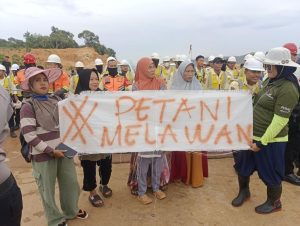
The absence of consultation is also reflected in the process of land acquisition from residents for the development of IPIP. Land acquisition matters are specifically handled by PT Rimau, a company that holds a 30% stake in IPIP. The land acquisition process has often involved security forces, violence, and attempts to criminalize residents. Another major issue is unfair compensation. In some cases, negotiations for land release took place in police offices under the supervision of law enforcement officers, leaving residents feeling intimidated and pressured into giving up their livelihoods and living spaces.
“Legal efforts undertaken by community members regarding the eviction of their land by companies involved in the IPIP project have previously been attempted, but the cases were not processed by the police. When the evictions occurred, residents directly protested on site. However, instead of their complaints being pursued, the community members themselves were reported by the company for allegedly obstructing the company’s activities,” Didi Hardiana, Program Manager, Monitoring and Evaluation of Puspaham said.
At the start of the project, IPIP claimed it would create up to 10,000 new jobs that would benefit local communities. This promise has frequently been used as a bargaining tool during negotiations with residents. The company said, there will be one job opportunity provided for every piece of land relinquished. However, in October 2025, based on residents of Sopura Village testimony, that no job vacancies were actually available for locals. Indonesian workers in the IPIP area also frequently experience wage discrimination and poor welfare conditions. They generally earn around IDR 6,000,000 per month, while foreign workers from China can earn between IDR 500,000 and IDR 1,000,000 per day.
The neglect of environmental protection, human rights, and worker welfare in IPIP represents a serious warning that must be addressed before further irreversible damage occurs. IPIP must not become another replication of industrial areas such as Morowali and Weda Bay. Rather than supporting downstream industrialization for economic development and the energy transition to mitigate the worst impacts of the climate crisis, the existing industrial developments are instead increasing environmental and social burdens.
For further information about the Pomalaa Industrial Park findings, please access the webinar recording on Satya Bumi Youtube Channel.